chaityas of ajanta caves
Chaityas are buddhist prayer halls that house a stupa. The word chaitya has its roots in sanskrit chita ~ meaning a pyre or a pile of ashes. The ancient rock-cut buddhist caves of Ajanta were built during the 2nd century BC ~ 6th century AD. All these caves and sculptures are carved out of the rocky hills of Ajanta. They start carving from top of the hill and reach the bottom, and hence do not make use of scaffolds for support.
In the next four chaitya images, you can see how buddhism evolved during the period, from the early hinayana style to the mahayana style of buddhism. Out of the 30 caves of ajanta, 9, 10, 19, 26 and 29 are chaitya grihas and the remaining caves are viharas, carved out of a horse-shoe shaped rock-cliff valley.
Ajanta Cave 10. Thought to be the oldest chaitya hall at Ajanta (2nd century BC). During the early hinayana period, stupa is the centrepiece and no idols are revered.
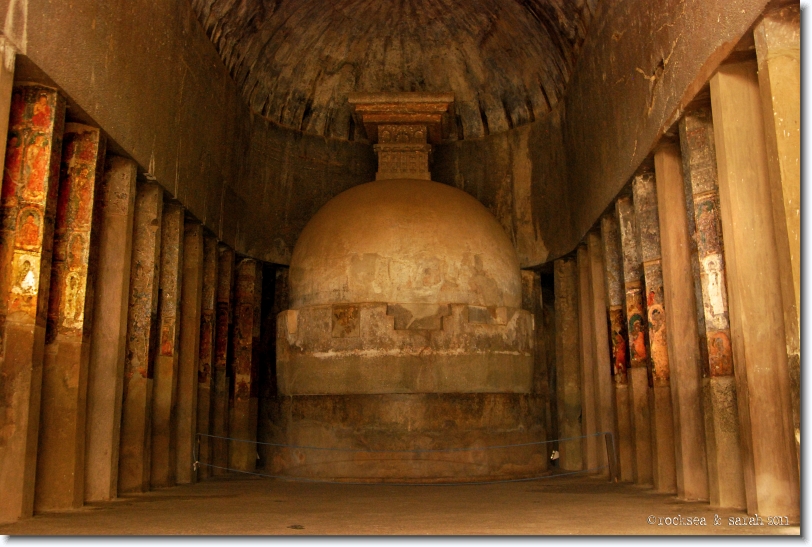
Ajanta Cave 9.
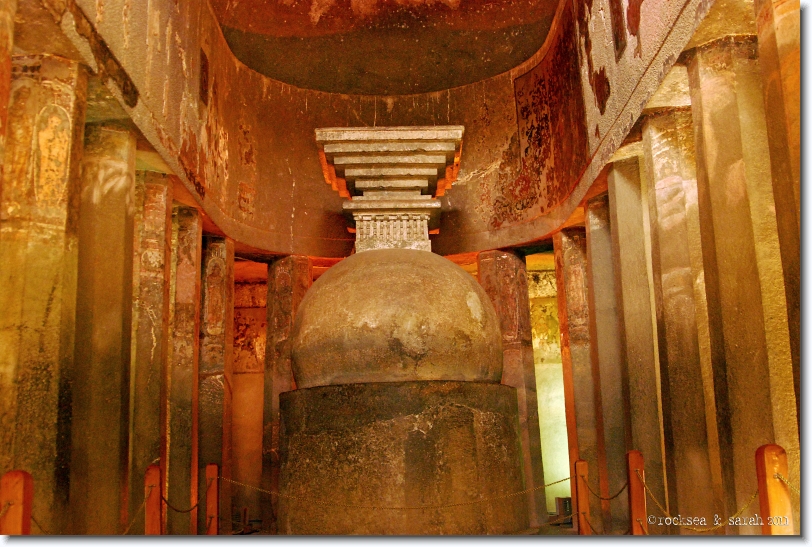
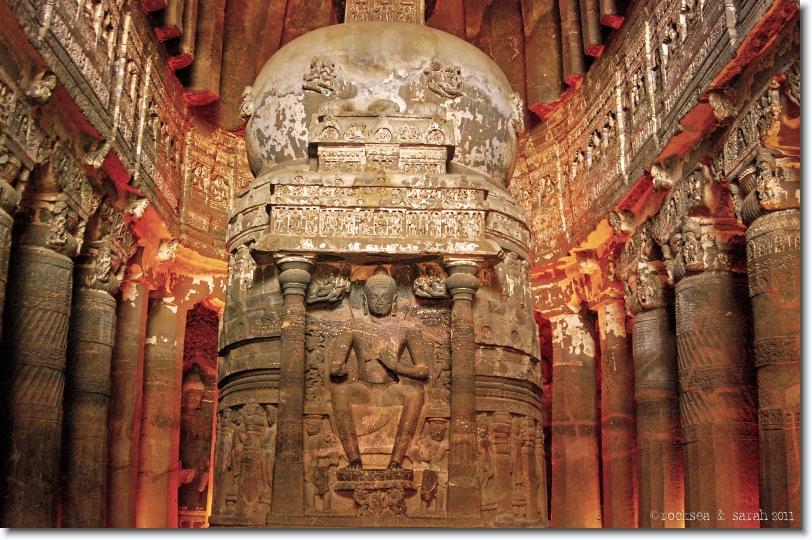
During the late mahayana period, chaitya has the buddha as the centrepiece, and idol worship is more prevelant. This is one of the most significant differences between these two periods, were relic worship was replaced by iconography.
Ajanta Cave 19. In the chaitya below, the buddha is seen with the stupa, probably refering to a transition from the hinayana to the mahayana style of buddhism.
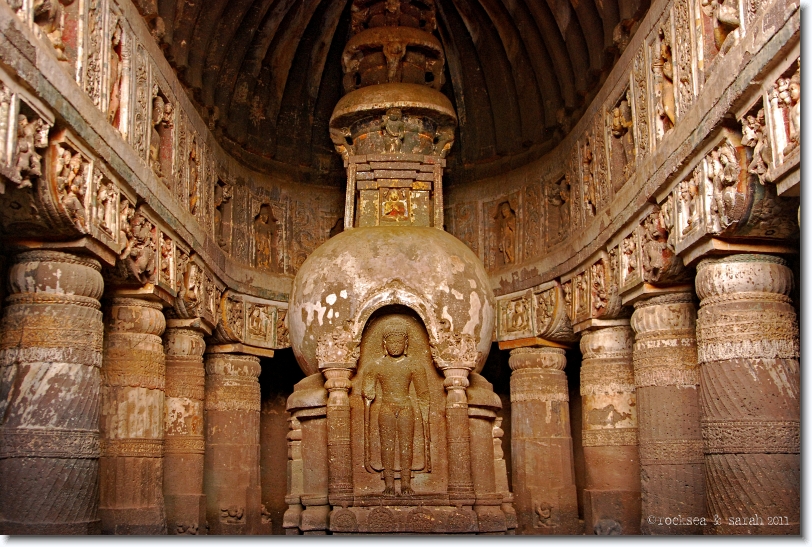
Ajanta Cave 26. Chaitya Hall with Buddha seated with his feet down.
Location of some of the ancient rock-cut buddhist caves in Maharashtra:
Karla Caves, Maharashtra, India
Ellora Caves, Maharashtra, India
Ajanta Caves, Ajanta, Maharashtra, India
Bedsa Caves, Maharashtra, India
Elephanta Caves, Maharashtra, India
Bhaja Caves, Maharashtra, India
For comparison, the chaityas from Bedsa and Karla are given below.
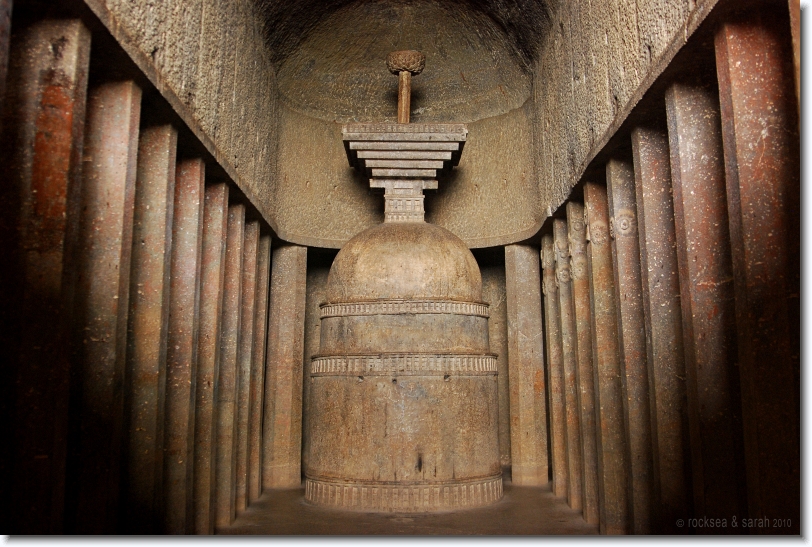
Chaitya at Bedsa. Simple chaitya hall with few decorations representing the initial style of architecture pertaining to Hinayana period.
Chaitya at Karle. Gigantic hall with high vaulted roof, with a lot of sculpture work on the pillars and the entrance, though the stupa is plain as in hinayana style.
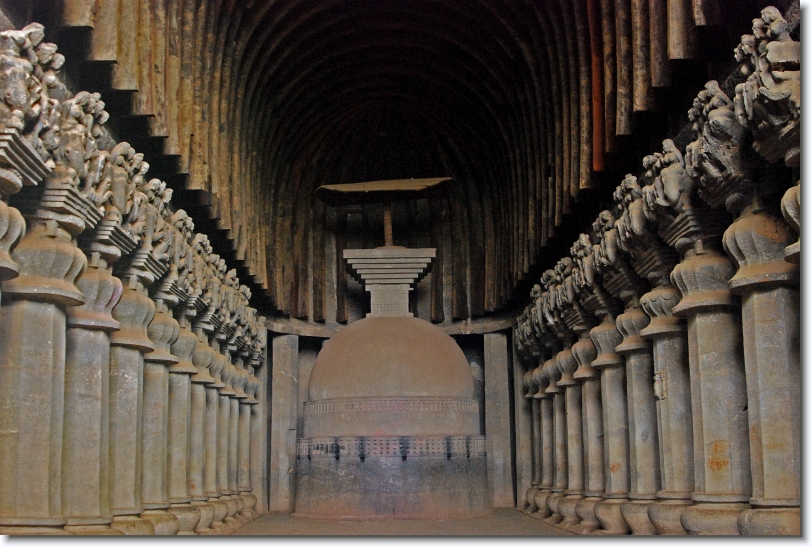
stupa: a dome-shaped structure, containing buddhist relics, used as a place of worship.